
Leading lines in Art
Leading lines are the paths a picture lays down for the eye to travel. Edges, limbs, a tilted spear, the run of a riverbank all act as routes the gaze follows whether the viewer notices or not. Arrange those routes and you decide the order in which a picture is read.
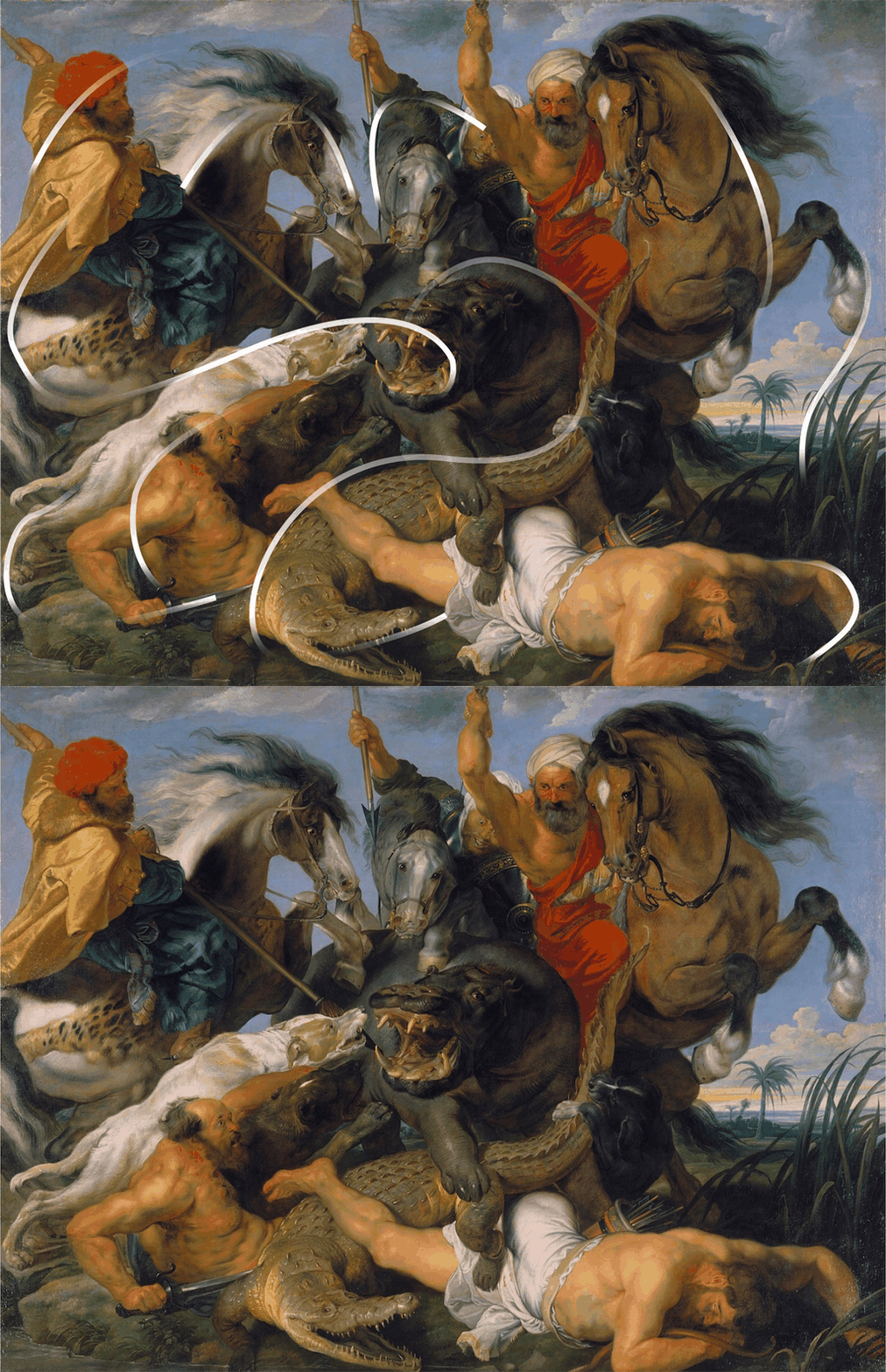
Rubens hands you chaos: rearing horses, lances, a thrashing hippo, dogs and hunters knotted into one writhing mass. Stand back, though, and the violence is not a free-for-all. Almost every long edge tilts the same way, lances, horse necks, the diagonal of a falling rider, and those tilts gather into a few sweeping lines that carry the eye up and across the tangle and back down into the struggle at the center. The movement you feel is laid down in the angles.
That is the lesson hiding in the mayhem. The eye chases continuity, so a series of edges that roughly line up reads as a single path, and a path has direction and speed. Rubens points his diagonals toward the kill, so the picture moves where the drama is. Movement in a picture is built, not found. The strategy is to decide where you want the eye to go, then bend the available edges, real or invented, until they agree on that route.
Compose on purpose, not by luck. Work it through on your own piece with ArtSensei.
Try ArtSenseiCommon questions
What is the difference between a leading line and a vanishing point?
A vanishing point is one specific destination where parallel lines converge in linear perspective. A leading line is broader: any edge or implied line that steers the gaze, whether or not perspective is involved.
Do leading lines have to be straight?
No. A curving shoreline or the bend of an arm guides the eye just as well. Curves read as slower and calmer; sharp diagonals read as fast and unstable, which is why Rubens leaned on them for a hunt.
Can leading lines work in a calm picture?
Yes, and they often matter more there. With less action to grab attention, a single quiet line does the steering.